Why Is Your Savings Account Quietly Losing You Money?
Most people grow up believing that putting money in a savings account is the responsible, safe thing to do. It is responsible, but it is not enough on its own. The reason comes down to inflation, which is the gradual increase in the price of goods and services over time.
To make this concrete, imagine your grandmother sets aside $300 in cash to buy a television in the future. Today that television costs $300. But next year, because of inflation, that same television costs $315. Her $300 has not changed, but its purchasing power has quietly shrunk.
The average inflation rate runs at around 2% per year. Most standard savings accounts in Australia and Europe offer interest rates of roughly 1 to 2%, which means the returns your bank pays you are barely keeping pace with inflation and in many cases falling behind it. You are not growing your money. You are, at best, treading water.
This is the fundamental reason passive investing matters. Investing gives your money the opportunity to grow faster than inflation erodes it, turning a passive store of value into an active wealth-building engine.
What Is Compound Interest and Why Does It Matter So Much?
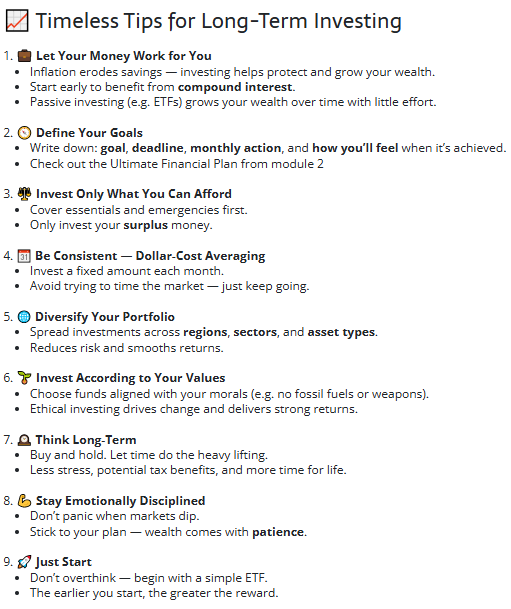
Once you understand inflation, the next concept that changes everything is compound interest. It is the mechanism that turns consistent, patient investing into extraordinary long-term wealth. It works by generating returns not just on the money you put in but on the returns you have already earned.
Here is how it works. If you have $100 earning 5% interest per year, after the first year you have $105. In the second year, you earn 5% not just on your original $100 but on the full $105. Each year the base grows, and each year the interest earned grows with it.
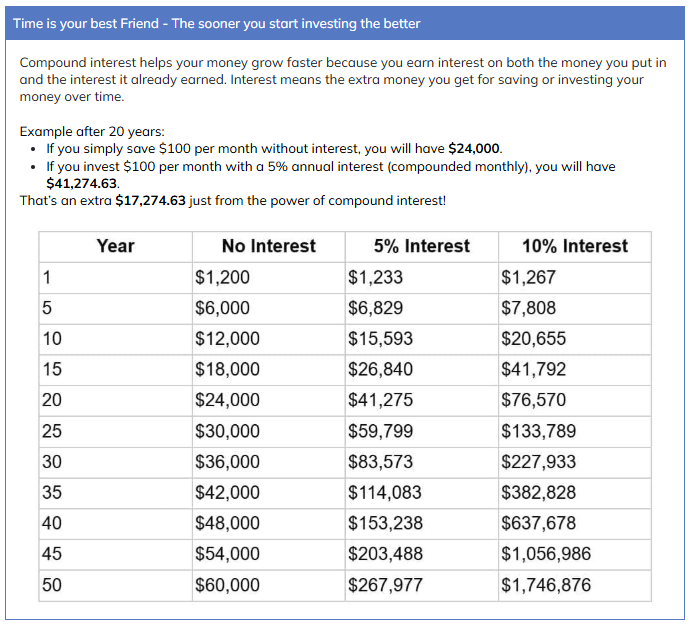
The numbers make this vivid. If you save $100 per month for 20 years with no investment return, you end up with $24,000. But if you invest that same $100 per month and earn an average annual return of 5% compounded monthly, you end up with $41,274. That is an extra $17,274 you never had to earn or save. Compound interest generated it purely by letting time and consistent contributions do their work.
The most important variable is time. A 25-year-old investing $100 per month will end up with dramatically more than a 35-year-old investing the same amount, simply because of the extra decade of compounding. The most valuable financial decision most young people can make is not which specific investment to choose, but simply starting as early as possible.
What Is Passive Investing and How Does It Work?
Passive investing is an approach to building wealth that does not require you to pick individual stocks, follow daily market news or spend hours researching companies. Instead of trying to identify which specific companies will perform well, you buy a broad slice of the entire market and hold it over the long term.
The primary vehicle for passive investing is the exchange-traded fund, or ETF. An ETF is a single investment product that holds a collection of many different company shares at once. When you buy one unit of an ETF, you are effectively buying a tiny stake in every company that fund contains. The S&P 500 tracks the 500 largest companies listed in the United States, for example. Buying an S&P 500 ETF means owning a small piece of all 500 simultaneously, from Apple and Microsoft to smaller firms across every sector of the economy.
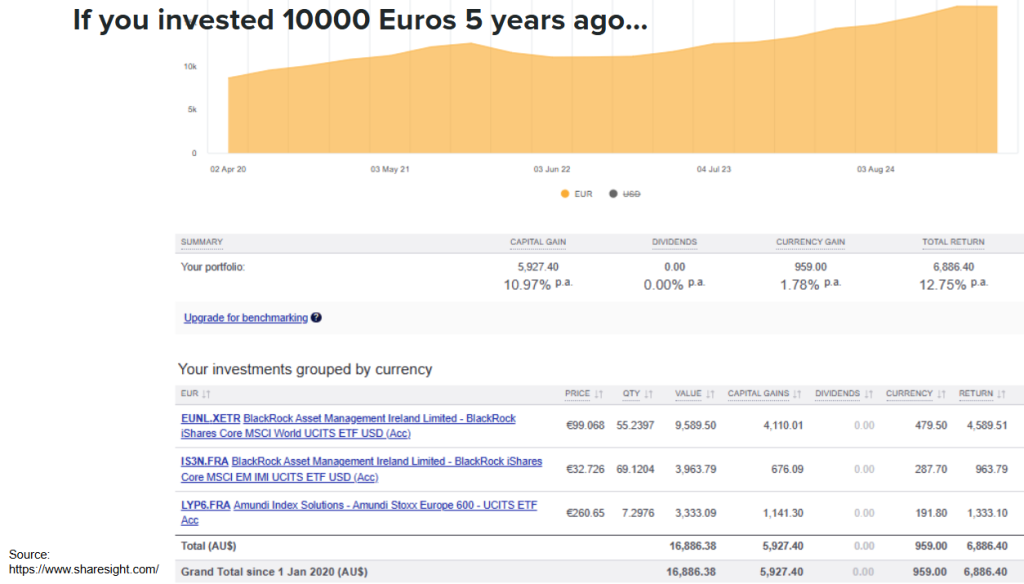
This approach has a remarkable track record. If you had invested $1,000 in an S&P 500 ETF just ten years ago, that investment would be worth over $3,000 today, without requiring any active decision after the initial purchase.
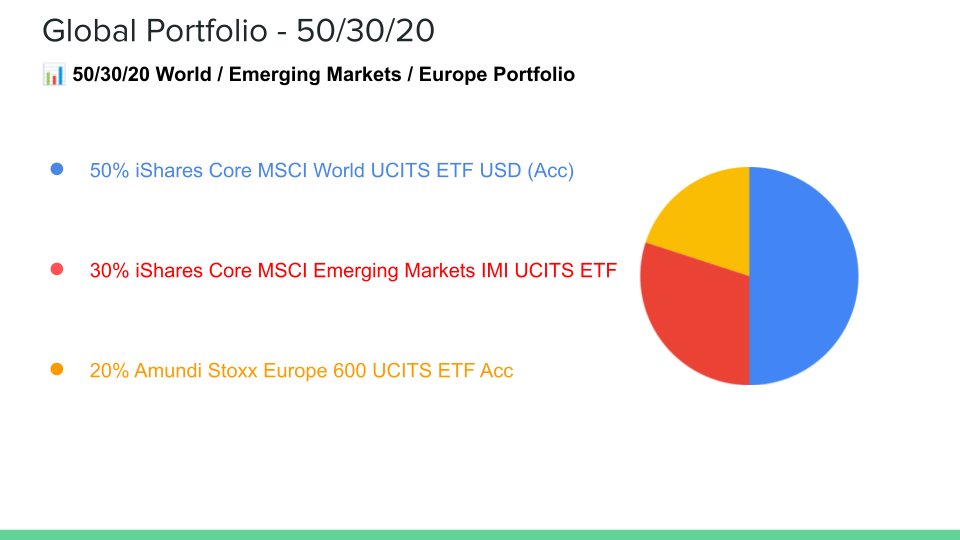
For investors who care about sustainability, the same passive investing logic applies to ESG and sustainable ETFs. These track indices of companies screened for environmental, social and governance criteria. You can build a globally diversified, values-aligned portfolio using the same buy-and-hold approach, simply by choosing ETFs that apply ethical screens to their underlying holdings. You can explore sustainable ETF options for Australian investors on the ASX website and for European investors through justETF.
Passive Investing vs Active Investing: Why the Odds Favour Passive
To understand why passive investing suits most investors so well, it helps to see it alongside its alternative. Active investing means choosing individual stocks or funds with the goal of outperforming the market, buying and selling frequently to capitalise on short-term price movements.
On paper this sounds appealing. In practice it is extraordinarily difficult, expensive and time-consuming. Research consistently shows that approximately 90% of professional active fund managers fail to outperform the broad market index over a 10-year period. These are highly educated, well-resourced professionals, and nine out of ten still cannot beat a simple index fund over the long run.
For an ordinary individual investor, the challenges are even greater. Active investing requires constant market monitoring and emotional discipline under pressure. It also generates higher costs: passive ETFs typically charge annual fees of 0.10% to 0.50%, while actively managed funds routinely charge 1% or more. That cost difference compounds against you just as investment returns compound for you.
Passive investing sidesteps all of this. You track the market rather than trying to beat it. Your costs stay low, your time commitment is minimal and your strategy does not depend on making better predictions than the rest of the market.
What Happens to Your Investments During a Market Crash?
One of the most common fears about investing is the possibility of a market crash. It deserves an honest answer rather than dismissal.
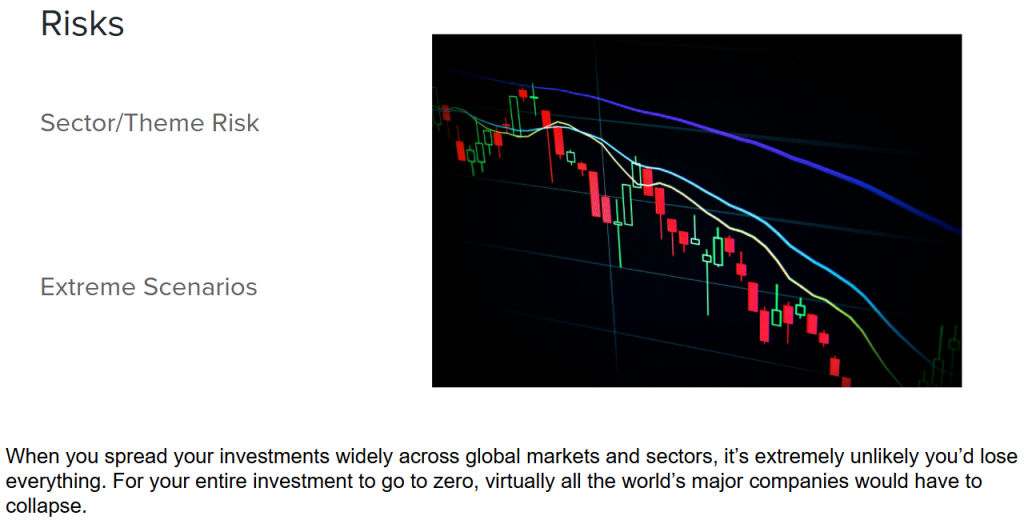
Markets do crash. During the global financial crisis of 2008, the S&P 500 fell by approximately 50% in a very short period. Investors who sold at the bottom locked in their losses permanently. Investors who stayed invested watched the market recover and reach new all-time highs within six to seven years, generating substantial returns in the decade that followed.
This pattern has repeated across every major market downturn in history. Markets have never declined in value over any rolling 20-year period. Short-term volatility is real and sometimes severe, but the long-term direction of a broadly diversified market has always been upward. An ETF holding 500 companies is not dependent on any single company’s survival, which means the risk of permanent total loss is essentially eliminated.
The greatest risk to most investors is not the market itself but their own emotional response to short-term drops. Panic selling during downturns and trying to time the market are the behaviours that destroy returns. A consistent, automated passive investing approach removes emotion from the equation entirely.
Key Takeaways: How to Start Passive Investing Today
Passive investing works because it puts three powerful forces to work simultaneously: the long-term growth of the global economy, the compounding of returns over time and the elimination of the costs and errors that come with trying to beat the market. None of these forces require financial sophistication, daily news-following or a large starting sum. They require consistency, patience and an early start.
If you invest $100 per month from your 20s into a low-cost, diversified ETF portfolio, compound interest and long-term market growth will do the heavy lifting. If you wait until your 30s or 40s, those same forces still work in your favour, just with less time to compound. The best time to start passive investing is as early as possible. The second best time is today.
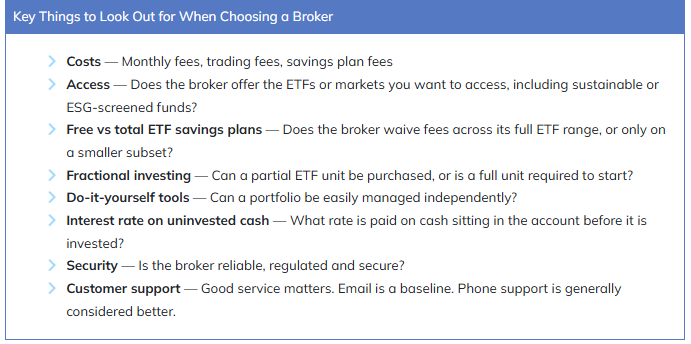
To begin exploring low-cost ETF options for Australian investors, visit the ASX website or the Moneysmart investor guide. For European investors, justETF provides a comprehensive free tool for researching UCITS ETF products across all major asset classes.
Frequently Asked Questions
What is passive investing in simple terms? Passive investing means buying a broad, diversified fund such as an ETF that tracks an entire market index, then holding it long term without trying to pick individual winners. You let the overall growth of the market build your wealth over time rather than actively managing your holdings.
How much money do I need to start passive investing? Very little. Many ETFs can be purchased for as little as $10 to $25, and some brokers have no minimum investment requirement at all. The amount matters far less than starting consistently and allowing compound interest to work over time.
Is passive investing safe? No investment is entirely without risk, but passive investing in broadly diversified ETFs is among the lowest-risk approaches available to retail investors. The risk of permanent loss is very low when you hold for the long term and avoid panic selling during market downturns.
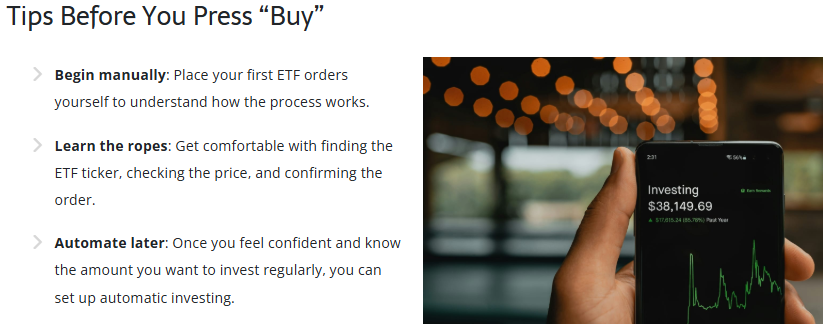
How often should I invest using a passive strategy? Once a month is the most practical approach for most people. Setting up an automatic monthly contribution removes the temptation to time the market and ensures you benefit from dollar cost averaging, buying more units when prices are low and fewer when prices are high.
What is the difference between passive investing and active investing? Passive investing tracks a market index and holds it long term. Active investing involves regularly buying and selling individual stocks or funds in an attempt to outperform the market. Research shows approximately 90% of active fund managers fail to beat the market over 10 years, making passive investing the more reliable choice for most beginners.
What is a sustainable or ESG ETF? A sustainable ETF applies environmental, social and governance screens to its underlying holdings, excluding companies involved in fossil fuels, weapons, tobacco and other sectors that do not meet defined sustainability criteria. They work exactly like conventional ETFs in terms of structure and how you buy and hold them, with the same passive, low-cost approach.
Can I start passive investing with just $100 per month? Yes. Investing $100 per month consistently into a diversified ETF is a completely viable long-term wealth-building strategy. Over 20 years at a 5% average annual return, $100 per month grows to over $41,000. The consistency matters far more than the starting amount.
tional depth on each topic with examples, figures and links to further reading.